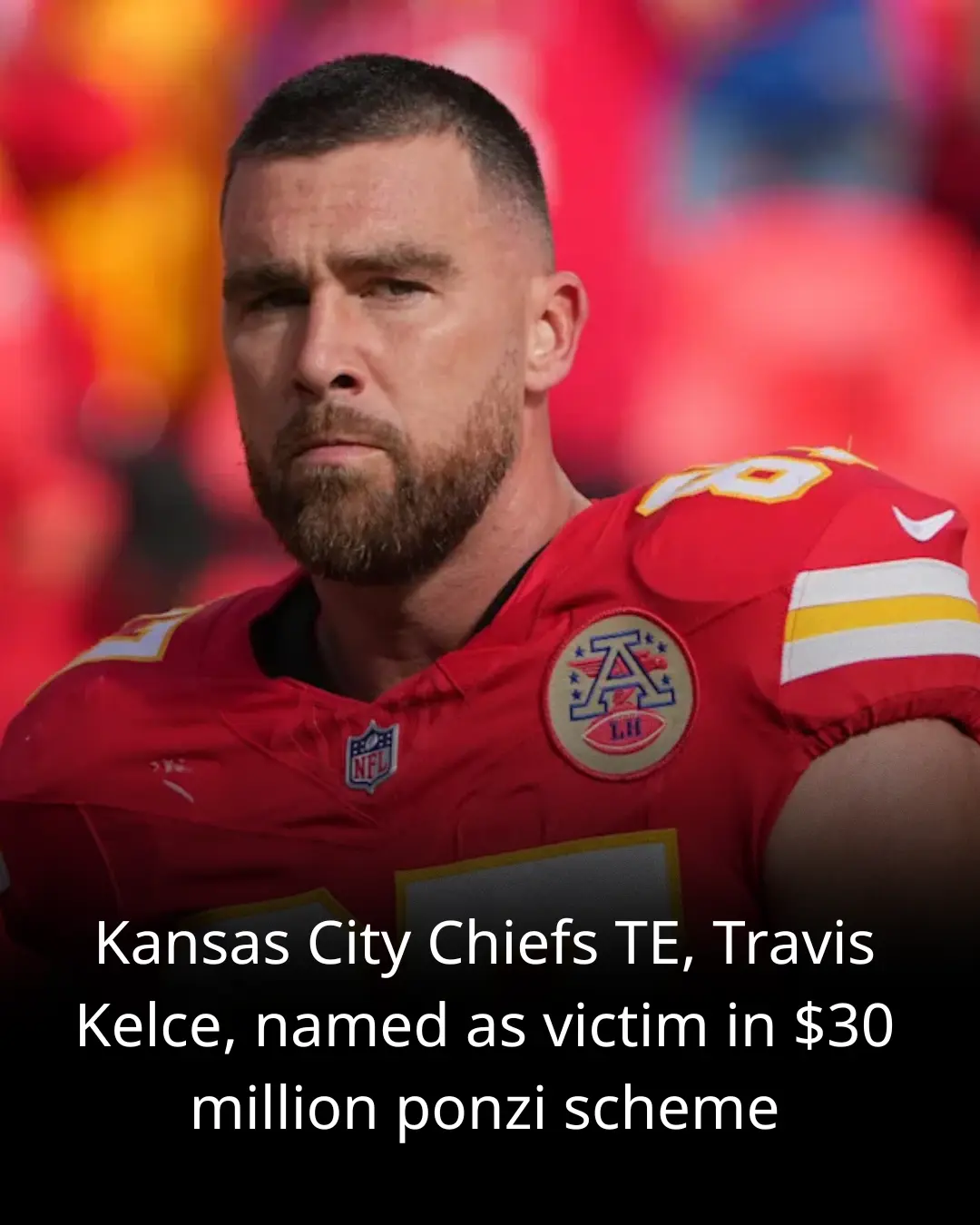
TRAVIS KELCE NAMED AS VICTIM IN $35 MILLION PONZI SCHEME — THE COURTROOM REVELATION THAT SHOCKED FANS
Travis Kelce is used to seeing his name dominate headlines because of football.
This time, however, his name surfaced in a very different setting — a federal courtroom in St. Louis, where prosecutors were detailing a multimillion-dollar investment fraud.
The Kansas City Chiefs tight end was identified by prosecutors as one of the victims of a scheme that took more than $35 million from investors, according to reporting from Reuters and the Associated Press.
The revelation came during the sentencing of Siddharth Jawahar, the former investment adviser behind the scheme.
Jawahar, 38, was sentenced to 11 years in federal prison after pleading guilty to three counts of wire fraud. He was also ordered to pay approximately $31.35 million in restitution to victims.
But while Kelce's name was mentioned in court, one crucial detail remains unknown:
How much money did the NFL star actually lose?
So far, prosecutors have not publicly disclosed the amount Kelce invested or the precise financial loss he suffered.
And that uncertainty has made the courtroom revelation even more intriguing.
KELCE WAS IDENTIFIED AS A VICTIM — NOT AN ACCUSED
The first and most important distinction is simple.
Travis Kelce was not identified as someone accused of participating in the fraud.
He was identified as a victim.
That distinction matters because the case centers on the actions of Jawahar and his investment company, Swiftarc Capital LLC.
According to prosecutors and court records, Jawahar collected money from investors while misrepresenting how their funds were being handled.
Kelce was among the investors identified as having been caught in that operation. Local reporting from St. Louis noted that very little was said about Kelce during the hearing beyond his identification as a victim. Prosecutors declined to provide additional details about individual victims.
His name was not included in the indictment or judgment documents obtained by USA TODAY Sports, further illustrating that the courtroom reference was about his status as a victim rather than an allegation against him.
That difference is critical as the story spreads online.
THE INVESTMENT COMPANY AT THE CENTER OF THE CASE
At the heart of the case was Swiftarc Capital, a Texas-based investment company founded by Jawahar.
According to prosecutors, the company began taking investor money in the mid-2010s.
The operation eventually brought in more than $35 million between approximately July 2016 and December 2023.
But investigators found a striking discrepancy between the amount collected and the amount actually invested.
Only about $10 million was ultimately invested, according to court-related reporting.
The rest of the money was allegedly diverted through the fraudulent operation.
Prosecutors said Jawahar used money from newer investors to repay earlier investors, a defining feature of a Ponzi scheme.
Other funds were used to finance an extravagant lifestyle.
Private jets.
Luxury hotels.
High-end restaurants.
Private club memberships.
Luxury apartments.
Expensive shopping.
Those details transformed what might initially sound like an ordinary investment dispute into a much larger federal fraud case.
THE INVESTMENT STRATEGY WAS NOT WHAT CLIENTS WERE LED TO BELIEVE
One of the most troubling elements described by prosecutors was the handling of investor money.
According to court records and government filings, Jawahar concentrated an enormous portion of investor funds into a single investment, Philip Morris Pakistan.
At one point, prosecutors said as much as 99 percent of the funds were concentrated there.
When that investment declined in value, investors allegedly were not given an accurate picture of what was happening.
Instead, Jawahar continued representing that investments were performing successfully.
That allowed the operation to continue.
New money could enter the system while earlier investors could receive payments, creating the appearance that the investment strategy was working.
Meanwhile, prosecutors said substantial sums were being used elsewhere.
The scheme continued for years before investigators eventually uncovered the fraud.
HOW DID TRAVIS KELCE BECOME CONNECTED?
Kelce's connection appears to date back to his investment in a Swiftarc-related fund.
A 2021 Forbes report previously identified Kelce as an investor in a fund created by Swiftarc. Other professional athletes were also associated with the investment operation, including NBA players Gary Harris, Tim Hardaway Jr. and Mason Plumlee.
However, the public record does not currently provide all the details about Kelce's individual investment.
That means several questions remain unanswered.
When exactly did Kelce invest?
How much did he invest?
How much, if anything, did he recover?
And what did he know about the investment before federal investigators uncovered the fraud?
Those questions should not be answered through speculation.
What is established is that prosecutors identified him as one of the victims.
THE SENTENCE WAS YEARS IN THE MAKING
Jawahar's case did not end with a financial settlement.
It ended with a federal prison sentence.
He pleaded guilty in January to three counts of wire fraud.
On September 15, 2026, a federal judge in St. Louis sentenced him to 11 years in prison.
He was also ordered to pay $31.35 million in restitution.
The sentencing followed years of fraudulent activity that prosecutors said caused millions of dollars in losses.
But the case became even more serious because of allegations concerning Jawahar's behavior after investigators began closing in.
Prosecutors said he attempted to interfere with the investigation by coaching a victim, attempting to erase evidence from his phone and providing false information about his immigration status.
Those allegations added another layer to a case that was already enormous in scope.
THE LUXURY LIFESTYLE BEHIND THE SCHEME
Perhaps one of the most striking aspects of the prosecution was how prosecutors said investor money was used.
The government described spending connected to private jet travel, luxury accommodations, private clubs, expensive dining and shopping.
Court-related reporting also detailed luxury apartments in New York and Austin.
The picture presented by prosecutors was of an investment operation that continued attracting money while its founder allegedly used substantial funds to maintain an extravagant lifestyle.
That contrast is at the center of the case.
Investors believed their money was being placed into investments.
Instead, prosecutors said millions were misdirected.
And among the people caught in that operation was one of the NFL's most recognizable stars.
KELCE'S NAME ADDS A NEW DIMENSION TO THE CASE
The appearance of Kelce's name has naturally attracted enormous attention.
He is not an anonymous investor.
He is one of the most recognizable players in professional football and a major figure both on and off the field.
But his celebrity should not obscure what the court record actually establishes.
The available reporting does not say Kelce was involved in operating the scheme.
It does not say he knew the investment was fraudulent.
It does not publicly establish how much he lost.
Instead, prosecutors identified him as a victim.
That distinction will likely remain important as more information about the case becomes available.
THE BIGGEST QUESTION IS STILL UNANSWERED
For now, the most significant missing piece is the financial impact on Kelce himself.
The overall scheme involved more than $35 million from investors.
Jawahar was ordered to pay more than $31 million in restitution.
But Kelce's individual investment and loss have not been publicly disclosed.
That leaves a major unanswered question surrounding one of the biggest names connected to the case.
How much was actually at stake for Travis Kelce?
And when did he first learn that the investment he had trusted was allegedly not what he had been told?
Those answers may eventually become public, but they are not currently established by the available court reporting.
For now, the confirmed story is already extraordinary.
A federal court in St. Louis heard the details of a multimillion-dollar Ponzi scheme.
A man at the center of the operation was sentenced to 11 years in prison.
More than $35 million was taken from investors, according to prosecutors.
And among the victims named in court was Kansas City Chiefs superstar Travis Kelce.
The NFL star walked into this story not as an accused participant, but as someone prosecutors say was deceived.
And with his individual loss still undisclosed, one question remains hanging over the case:
Just how much did Travis Kelce lose — and what else could emerge as the full financial story is finally uncovered?