BEYOND THE STADIUM LIGHTS: JULIAN SAYIN, FAMILY, AND WHAT BUCKEYE NATION VALUES MOST
The person behind the jersey
At Ohio State, a quarterback does not simply play a position. He steps into a conversation that stretches across generations, from family living rooms to crowded sections of Ohio Stadium. Julian Sayin has become a familiar name in that conversation, and the expectations surrounding the Buckeyes make every public appearance feel significant. Yet the most compelling part of any young athlete’s story is often what fans cannot see: the ordinary relationships, quiet encouragement, and personal routines that make the demanding days possible. It is worth looking beyond the scoreboard to understand the human side of a player whose performances invite intense attention.

A family story without a manufactured crisis
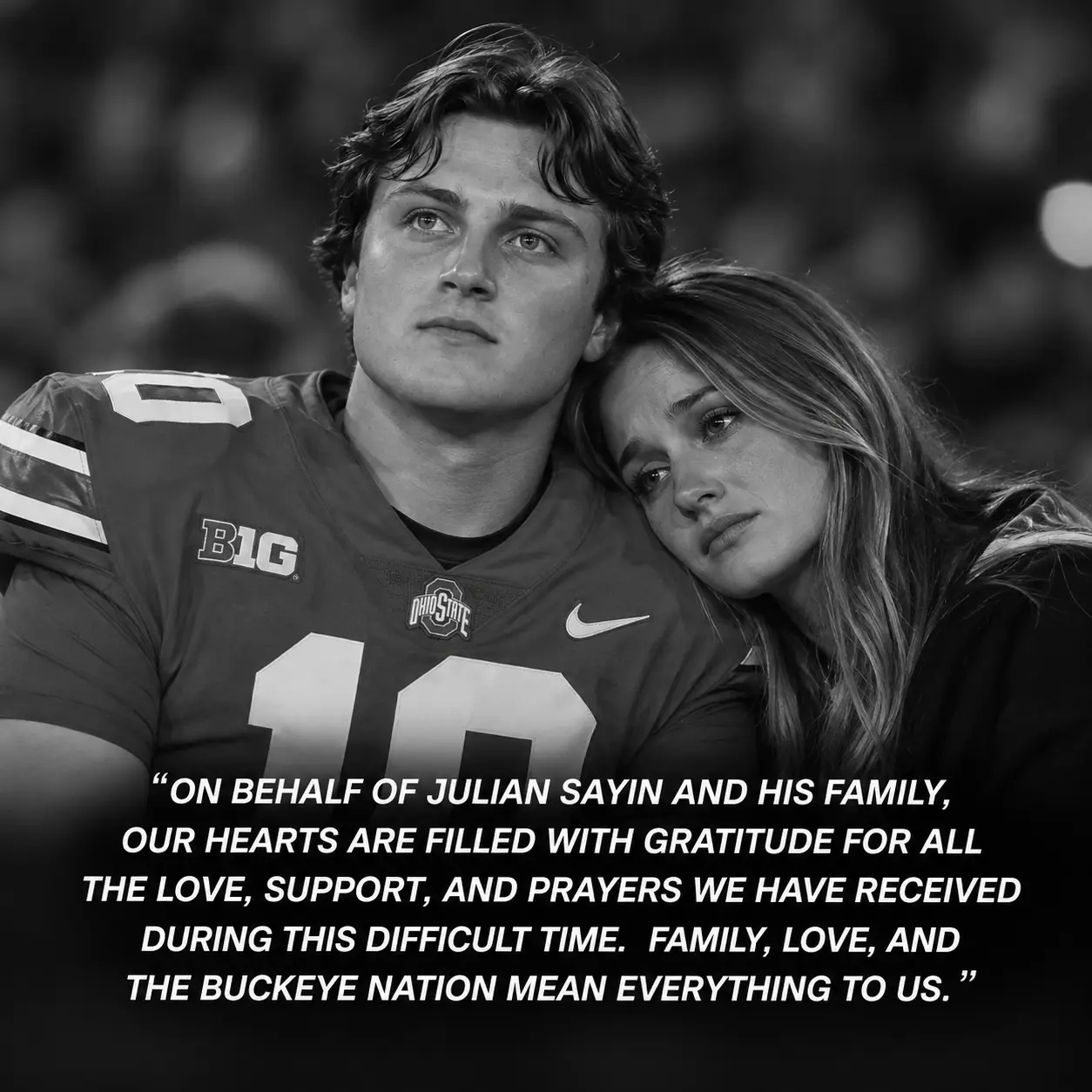
The social-media caption that inspired this discussion evokes an emotional message about Sayin and his family. It does not establish that a family emergency occurred, that anyone issued a statement, or that an appeal for prayers was made. Those distinctions matter, especially when a convincing edited photograph can spread faster than its explanation. A picture of a player looking concerned is not evidence of bad news. What can be discussed meaningfully is how families help athletes manage pressure and how supporters can express appreciation without claiming access to private circumstances.

The weight of the scarlet jersey
Ohio State football carries unusual visibility. Every throw is studied, every mistake is replayed, and every promising performance invites predictions about what comes next. For a young quarterback, those expectations can be exhilarating and exhausting at once. A routine practice can become a public debate, while a single Saturday can reshape outside perceptions. Coaches and teammates can help create stability, but the influence of trusted people beyond football should not be overlooked. A call home, a familiar voice, or a few moments away from the game can remind an athlete that identity is bigger than statistics.
Why Buckeye Nation connects
The devotion of Ohio State fans is rooted in continuity. Families attend games together, pass down favorite traditions, and return to Columbus with memories attached to particular seasons. That sense of belonging is one reason personal stories resonate so strongly. Fans may feel they know a player because they have watched him develop, but admiration does not erase the boundary between public performance and private life. The strongest form of support allows a player to remain a person rather than a character in an endless stream of speculation.

The power of a quieter message
Not every meaningful football story needs an alarming headline. There is something moving about the less dramatic truths: the parent who drove a child to practice, the teammate who offered encouragement after a difficult drill, or the coach who helped a player recover confidence. Those experiences are common across the sport, even when the details of a particular athlete’s family life remain private. In Sayin’s case, celebrating the importance of support is more responsible than assigning him an unverified tragedy or inventing a statement in his name.
Leadership is also about perspective
The quarterback position asks for composure under scrutiny. Players must absorb information quickly, communicate clearly, and respond to setbacks without losing the confidence of the huddle. That skill set does not appear overnight. It grows through preparation, relationships, and a willingness to learn. When fans discuss Sayin’s future, it is natural to focus on arm talent and decision-making. But resilience and perspective are also part of the development process. They often come from a network of people who care about the athlete whether the team wins or loses.

How fans can show support
Support can be simple and specific. Celebrate hard work rather than demand perfection. Resist sharing claims about medical issues or private relationships without a credible source. Treat edited images and dramatic captions as creative material until reliable reporting says otherwise. And remember that young athletes are learning in public, often before they have finished discovering who they want to become. These habits make online communities more welcoming and protect the people at the center of the stories fans love.
A bigger meaning than one Saturday
When the crowd rises at Ohio Stadium, the moment feels enormous. But football seasons move quickly, and even the most memorable plays eventually become highlights. The relationships that carry athletes through success, criticism, and change can last far longer. That is the lasting emotional point behind this story: family, friendship, and a community’s encouragement matter beyond the final score. For Buckeye Nation, appreciating Julian Sayin means cheering for the quarterback on Saturdays while respecting the person he remains every other day of the week. There is also a lesson for the wider sports conversation. A community can feel close to a player without knowing every detail of his life, and that distance should be treated with care rather than filled by rumor. Parents, teachers, former coaches, and longtime friends are part of the background of many athletic journeys, but their experiences should not be invented for an exciting post. If Sayin chooses to share something personal, his own words and context should lead the discussion. Until then, Buckeyes supporters have plenty of genuine reasons to celebrate his effort, his growth, and the people who help young athletes thrive. The most respectful story is often the one that leaves private questions unanswered.


 Life inside the spotlight
 Archive \


