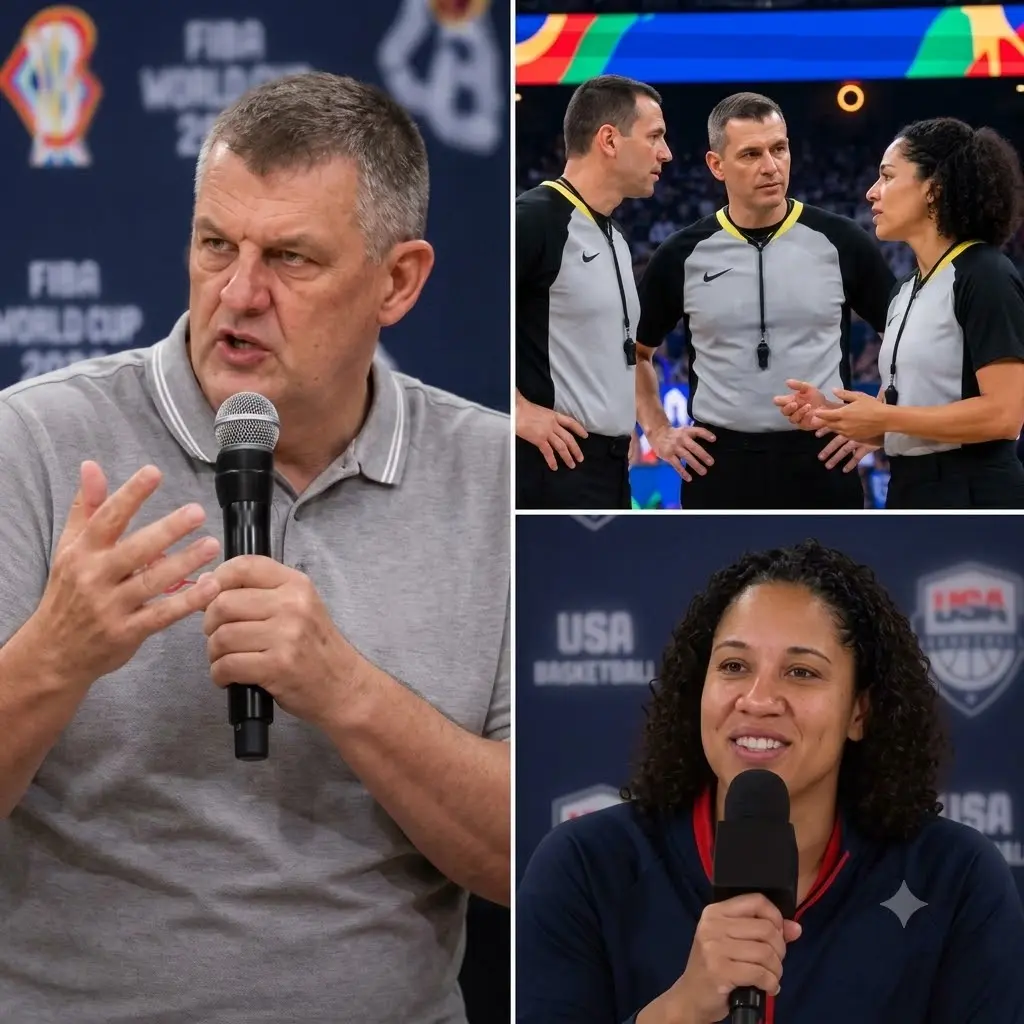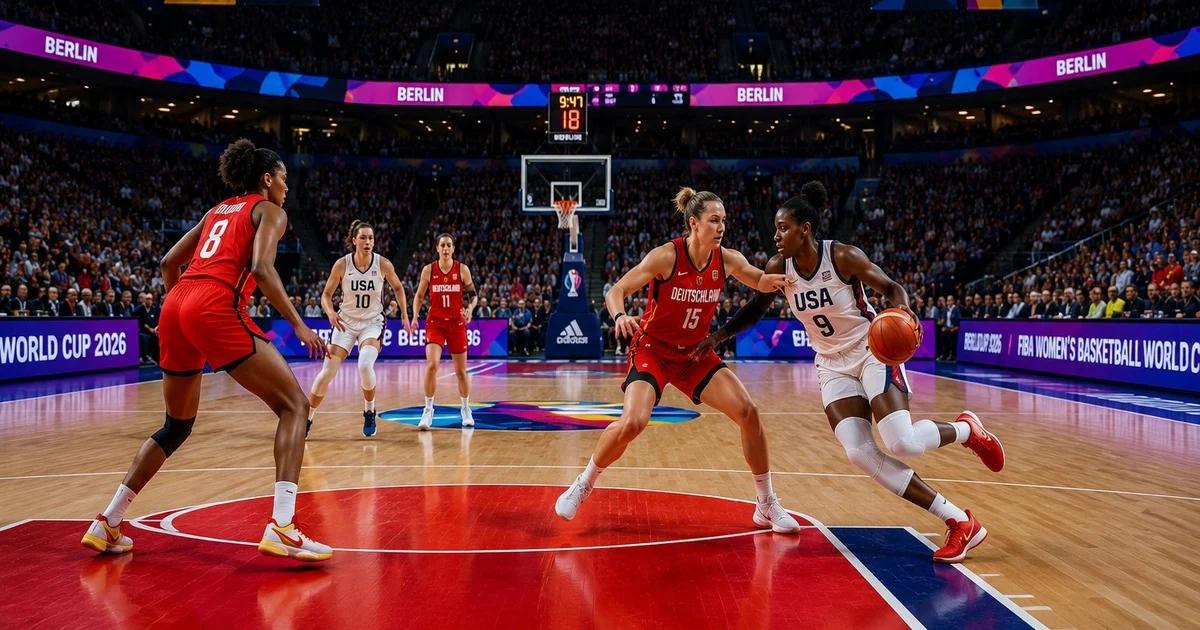
The moment basketball fans around the world have been waiting for has officially arrived. Team USA and Spain are set to collide in a high-stakes FIBA semifinal matchup, with a place in the championship game hanging in the balance.
At this stage of the tournament, there are no second chances.
Every possession matters.
Every defensive rotation matters.
Every decision made under pressure could determine which team continues its championship journey and which team sees its dream come to an end.
For Indiana Fever supporters, this semifinal carries another major storyline: Caitlin Clark stepping onto one of the biggest stages in international basketball.
The Fever star has already proven her ability to change games with her shooting, creativity and elite passing vision. Now, she faces another challenge—helping Team USA navigate a semifinal against a Spain team known for discipline, experience and tactical execution.
This is exactly the type of matchup where details become everything.
Team USA’s biggest advantage could be its ability to create speed.
When the Americans force a turnover or secure a defensive rebound, they can instantly transform defense into offense. Few players understand that transition opportunity better than Clark.
The moment she receives the basketball, she begins reading the entire floor.
A teammate cutting toward the basket becomes an immediate option.
A shooter filling the wing creates another possibility.
A defender retreating too far opens the door for Clark herself to attack.
That ability to make decisions before the defense is fully organized is one of the qualities that makes her such a unique offensive weapon.
Spain knows this.

The Spanish defense cannot simply wait until Clark crosses half court.
The challenge begins the moment Team USA gains possession.
Protecting the basketball will be one of Spain’s most important priorities.
A careless turnover could become an easy American basket within seconds.
A rushed offensive possession could create the same problem if Spain fails to maintain defensive balance.
The Spanish team will need to remain aggressive while avoiding the mistakes that allow Team USA to control the pace.
The ideal scenario for Spain is a controlled game.
Force Team USA into longer possessions.
Make the Americans execute in the half court.
Reduce transition opportunities.
That strategy could turn the semifinal into a tactical battle where patience becomes just as important as talent.
However, slowing the game does not eliminate the challenge of defending Clark.
Her shooting range creates problems in any style of basketball.
In the half court, Clark forces defenders to guard farther away from the basket than they normally would.
That single adjustment can change an entire defensive structure.
A defender following Clark beyond the three-point line creates more room behind her.
Driving lanes become wider.
Screens become harder to defend.
Interior defenders have more difficult decisions.
Other American players receive additional space.
Clark’s influence is not limited to the shots she takes.
Her presence alone changes how opponents must defend.
Spain could attempt to counter this by applying pressure and forcing Clark to give up the basketball.
It is a familiar strategy.
Trap the ball-handler.
Send a second defender.
Force another player to create.
But every aggressive defensive move carries risk.
If Spain sends two defenders toward Clark, another Team USA player should have an advantage.
The key will be how quickly the Americans recognize and attack that opening.
Clark’s first pass can escape pressure.
The next pass can force another rotation.
A final decision can create an open opportunity.
The difference between a successful possession and a wasted one may come down to timing.
If Team USA moves the basketball quickly, Spain may spend the entire possession trying to recover.
If the Americans hold the ball too long, Spain can rebuild its defense.
That makes chemistry extremely important.
International basketball requires stars to adjust.
Players who normally dominate possessions with their professional teams may have different responsibilities.
Some nights they may be primary scorers.

Other nights they may need to defend, screen, rebound or create space.
Clark faces the same challenge.
With Indiana, she carries enormous offensive responsibility.
With Team USA, she plays alongside other elite talents.
That gives her another opportunity to expand her game.
One area worth watching closely is Clark’s movement without the basketball.
After she passes, does she remain still?
Or does she immediately relocate?
Does she use screens away from the ball?
Does she cut when defenders turn their attention elsewhere?
Those actions can make her even more difficult to defend.
For the Fever, this development could become extremely valuable.
WNBA opponents already understand how dangerous Clark is when she controls the ball.
The next challenge is making defenses uncomfortable even when she does not have possession.
Deny her the ball?
She can move into another position.
Trap her?
She can pass and immediately create another threat.
Send extra defenders?
A teammate can attack the space created.
Those are the types of adjustments that separate great offensive players from complete offensive engines.
Spain will also present major challenges on the offensive end.
Perimeter shooting could become one of the most important factors.
If Spain consistently knocks down outside shots, Team USA will have to extend its defense.
That creates longer rotations.
More difficult closeouts.
More opportunities for drives.
The Americans will need discipline.
Close too slowly and Spain gets open looks.
Close too aggressively and Spain can attack the basket.
The best defenses operate as a connected unit.
One player challenges the shot.
Another protects the lane.
Another prepares for the next pass.
Then the entire team must finish the possession with a rebound.
That final step could become a deciding factor.
Team USA cannot run if Spain repeatedly wins offensive rebounds.
Second-chance opportunities allow Spain to score while also preventing Clark from pushing the pace.
Rebounding is therefore not just a physical battle.
It is a transition battle.
The team that controls the glass may control the rhythm of the game.
Bench production could also influence the outcome.
Semifinals often become tests of depth because starters cannot carry maximum intensity forever.
Team USA has the ability to bring fresh players into the game while maintaining defensive pressure and offensive creativity.
Spain must survive those stretches.
A single run can change everything.
One turnover.
One defensive stop.
One transition basket.
One three-pointer.
Suddenly a close semifinal can become a double-digit game.
Preventing those momentum swings will be critical.
At the same time, Team USA must avoid becoming careless when it builds an advantage.
The best teams understand that every possession requires the same level of focus.
That becomes even more important if the game reaches the fourth quarter with the score close.
Late-game basketball is different.
Possessions slow down.
Defenses become more aggressive.
Coaches search for specific matchups.
Every mistake becomes magnified.
This is where Clark’s decision-making could become crucial.
If Spain switches a screen, she must identify the advantage.
If Spain traps, she must make the correct pass.
If Spain denies her completely, another American creator must step forward while Clark continues moving.
The best play will not always be the most spectacular.
Sometimes the right decision is a deep three.
Sometimes it is attacking the rim.
Sometimes it is simply making the pass that creates the next opportunity.
Championship basketball rewards execution.
Mental strength will also play a major role.
Spain enters the semifinal knowing it has the opportunity to eliminate one of the tournament favorites.
Team USA enters carrying the expectations that come with being one of basketball’s most powerful programs.
Handling that pressure could determine everything.
A missed shot cannot become a defensive mistake.
A turnover cannot become another rushed possession.
One difficult moment cannot change the entire approach.
Clark has already experienced that level of pressure with the Indiana Fever.
Every game she plays receives enormous attention.
Every performance creates discussion.
That environment has helped develop the mental toughness required for moments like this.
For Fever fans, USA vs. Spain is about more than checking Clark’s final statistics.
Watch how Spain defends her.
Watch how she handles pressure.
Watch her decisions against traps.
Watch her movement away from the basketball.
Watch how much attention she attracts even when another teammate takes the shot.
Those details show the true impact of an elite playmaker.
Fans looking for the exact semifinal tip-off time, television coverage and authorized streaming options should check the latest official FIBA and regional broadcaster listings, as availability may differ by location.
Once the opening tip arrives, the mission becomes simple.
🇺🇸 Team USA vs. 🇪🇸 Spain.
One semifinal.
One place in the championship game.
One opportunity to keep the title dream alive.
And for Caitlin Clark and Indiana Fever fans around the world, another unforgettable basketball moment where every pass, every shot and every possession could decide history.

The business of women's basketball is changing at a breathtaking pace.
What was once viewed as a niche corner of the American sports industry has transformed into one of the fastest-growing markets in professional sports. New competitions are attracting major investors, established stars are gaining unprecedented visibility, and players are beginning to have more influence over the direction — and economics — of the game.
Now Caitlin Clark is at the center of another explosive story.
A sensational claim circulating around women's basketball suggests that Clark has accepted a staggering $50 million offer from Unrivaled, supposedly leaving the Indiana Fever stunned and potentially creating one of the biggest power shifts the sport has ever witnessed.
If true, the ramifications would be enormous.
But there is an important distinction between an attention-grabbing headline and a confirmed transaction.
Before declaring that Clark has accepted $50 million or “left” Indiana, the basketball world would need official confirmation of the agreement, its actual financial terms and what participation in another competition would mean for her WNBA status.
Those details matter enormously.
Still, the reason such a rumor can spread so rapidly is obvious.
Clark possesses unprecedented leverage.
Few women's basketball players have ever combined elite on-court production with this level of mainstream commercial attention.
Her influence can be measured in multiple ways.
Television interest follows her.
Ticket demand follows her.
Social-media conversation follows her.
Merchandise interest follows her.
National debate follows her.
Even people who rarely watched women's basketball before Clark's professional arrival now recognize her name.
That creates extraordinary economic value.
And economic value creates negotiating power.
For decades, professional athletes primarily depended on their league salaries and traditional endorsements.
The emerging women's basketball ecosystem offers something different.
Players can potentially evaluate multiple opportunities involving competition, sponsorships, media, ownership interests and other forms of compensation.
That changes the balance of power.
And Clark may be uniquely positioned to benefit.
Consider what her participation could mean to any basketball property attempting to grow.
She doesn't simply provide another player.
She potentially provides an audience.
Every Clark appearance becomes content.
Every matchup becomes a promotional opportunity.
Every highlight becomes material capable of circulating across social platforms.
Every game can become an event.
That is why the hypothetical $50 million figure immediately creates such intense conversation.
The number sounds extraordinary because it is extraordinary.
But if an organization genuinely believed Clark could dramatically accelerate its commercial growth, the logic behind pursuing her aggressively would be understandable.
There is another side to this story, however.
The Indiana Fever have enormous incentive to maintain Clark as the centerpiece of their future.
Clark's relationship with Indiana extends beyond a normal player-franchise arrangement.
She has become inseparable from the Fever's modern identity.
Fans arrive wearing her jersey.
Opposing arenas market games around her appearance.
National television conversations frequently begin with Clark whenever Indiana plays.
That creates the impression that losing her would represent a catastrophe.
Hence the phrase:
WNBA NIGHTMARE.
But that framing may oversimplify how modern women's basketball works.
Playing in another competition does not necessarily mean permanently abandoning a WNBA franchise.
Players can participate in different basketball environments depending on contract structures, league calendars and applicable rules.
Therefore, even if Clark eventually joined Unrivaled or another offseason competition, saying she had “left the Fever” would require separate evidence.
That distinction is crucial.
Still, imagine for a moment that an organization actually placed a $50 million opportunity in front of Clark.
What should she do?
From a business perspective, she would have to consider considerably more than the headline number.
Guaranteed compensation would matter.
Contract length would matter.
Scheduling would matter.
Injury protections would matter.
Marketing obligations would matter.
Long-term control over her image and likeness would matter.
Potential ownership or equity could matter.
And perhaps most importantly, Clark would have to consider how another basketball commitment fits into the trajectory of her career.
Professional basketball already creates enormous physical demands.
WNBA players endure travel, practices, games, recovery and constant preparation.
Clark also carries media responsibilities and endorsement obligations that most players never experience at comparable scale.
Adding another competition could generate significant financial opportunity.
It could also create additional workload.
That tradeoff cannot be ignored.
Clark's value ultimately begins with basketball.
Protecting her body and preserving the longevity of her career may be worth more than maximizing short-term appearances.
That is why the structure of any genuine offer would be as important as its reported dollar amount.
The broader significance of this rumor goes beyond Clark.
It represents something much larger happening across women's sports.
Players are gaining options.
For years, elite women's basketball players frequently traveled overseas during the WNBA offseason because international clubs could provide additional compensation.
The emergence of new domestic opportunities potentially changes that equation.
Players can remain closer to home.
Brands can invest in them year-round.
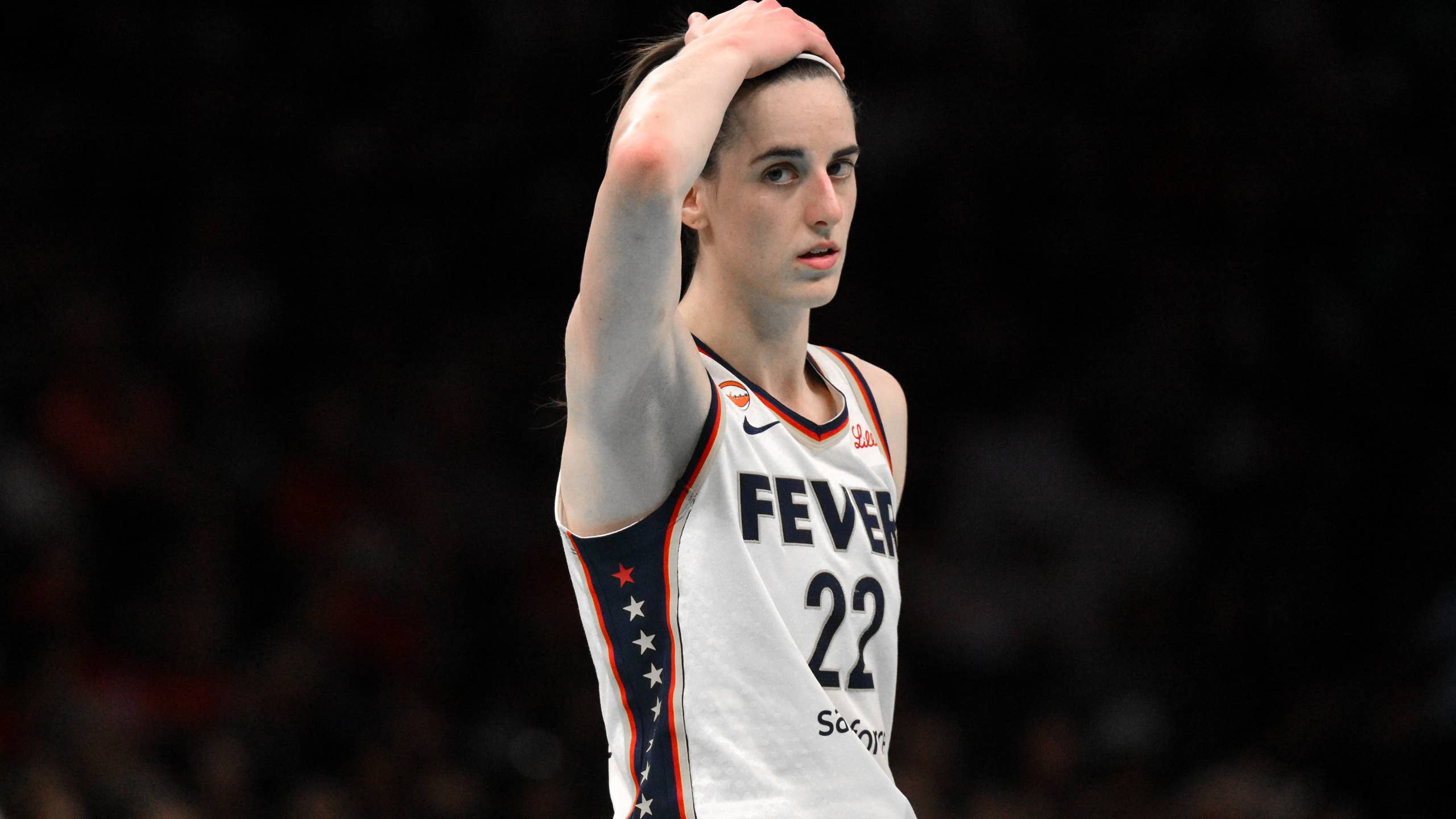
Fans can continue following familiar stars outside the traditional WNBA calendar.
And athletes may gain more leverage when negotiating how and where they play.
Competition between basketball properties can ultimately increase player value.
If one league offers more money, another must consider how to respond.
If one competition offers equity, competitors may need to rethink traditional compensation.
If fans demonstrate that they will follow players rather than simply league brands, athletes gain even more bargaining power.
Clark's popularity makes her a perfect symbol of that transformation.
She represents something professional sports executives understand very well:
audience mobility.
Fans do not necessarily follow institutions forever.
Sometimes they follow stars.
If Clark appears somewhere, a significant portion of her audience may follow.
That gives her negotiating leverage few athletes possess.
It also explains why every rumor involving her becomes enormous.
But Clark is not the only beneficiary of women's basketball's expanding marketplace.
A'ja Wilson, Breanna Stewart, Napheesa Collier, Sabrina Ionescu, Angel Reese and other prominent players contribute to a broader ecosystem in which individual athletes can build recognizable brands.
More competition for those athletes can increase their value.
And that could eventually influence compensation across the entire sport.
This is where the supposed $50 million Clark offer becomes fascinating even if the specific viral claim proves exaggerated or false.
The fact that people can imagine a women's basketball player commanding numbers once considered impossible tells us something about how quickly expectations have changed.
A decade ago, the idea of women's basketball generating conversations involving enormous individual commercial valuations might have seemed unrealistic to many observers.
Today, the question increasingly feels like:
How high can this market go?
Clark is helping force that conversation.
But there is one part of the viral headline that deserves particular caution.
“LEAVES FEVER STUNNED.”
Those three words imply a fracture.
They suggest betrayal.
They suggest Indiana executives were blindsided.
They suggest Clark has chosen one organization over another.
None of those conclusions should be drawn without evidence.
A genuine offseason agreement could potentially coexist with Clark's WNBA commitments depending on its structure.
And until there is an authenticated announcement saying otherwise, Clark should not be portrayed as having abandoned Indiana.
That does not make the business story less exciting.
It makes it more accurate.
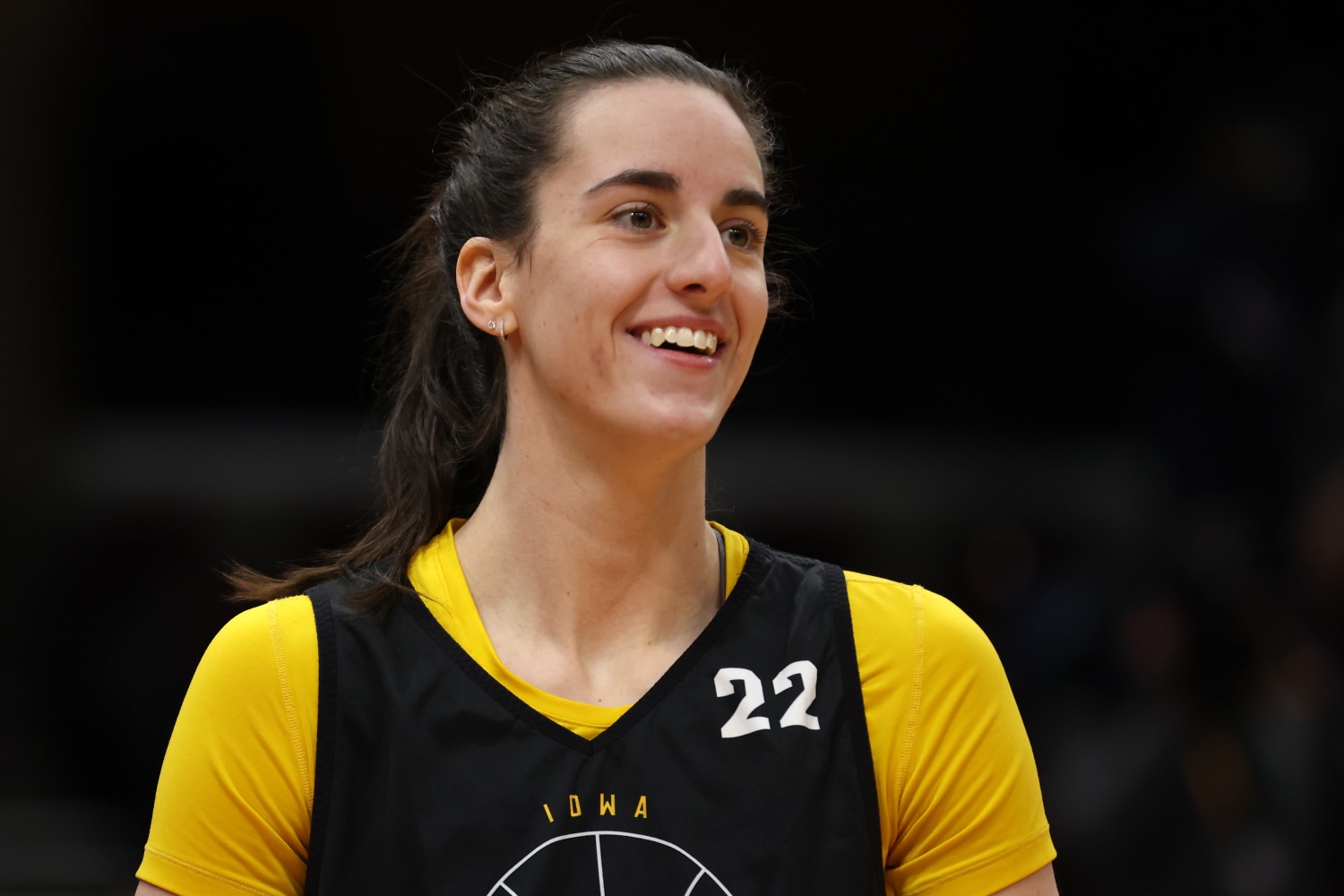
Because the real revolution occurring in women's basketball isn't necessarily that Caitlin Clark is walking away from the Fever.
It is that players like Clark may be entering an era where they possess choices previous generations could barely imagine.
More money.
More platforms.
More leverage.
More ownership possibilities.
More control.
That is not automatically a nightmare for the WNBA.
Handled correctly, it could become evidence of the sport's expanding economic power.
The WNBA's challenge is ensuring that its own growth keeps pace with the value its stars are creating.
Clark's challenge is deciding which opportunities strengthen her career rather than simply enlarging her schedule.
And Unrivaled's challenge is demonstrating that it can build a sustainable product capable of attracting and retaining the biggest names in basketball.
If those forces continue pushing against one another, women's basketball could enter an entirely new financial era.
Perhaps one day a $50 million basketball offer for a women's player will not sound shocking at all.
But until an official agreement establishes that Clark has actually accepted one, the viral headline remains a dramatic possibility — not a confirmed transaction.
One thing, however, is already undeniable:
Caitlin Clark has become valuable enough that virtually every major decision involving her can move the conversation around women's basketball.
And that alone tells us how much the business of the game has changed.