
 What appeared to be a fleeting sideline exchange involving Caitlin Clark has suddenly become the center of a much larger controversy, with an Italian coach facing allegations that remarks directed toward the Team YSA star crossed the boundary between competitive trash talk and unacceptable personal conduct.
Advertisement
Advertisement
The moment itself reportedly lasted only seconds.
But the questions surrounding it have lasted far longer.
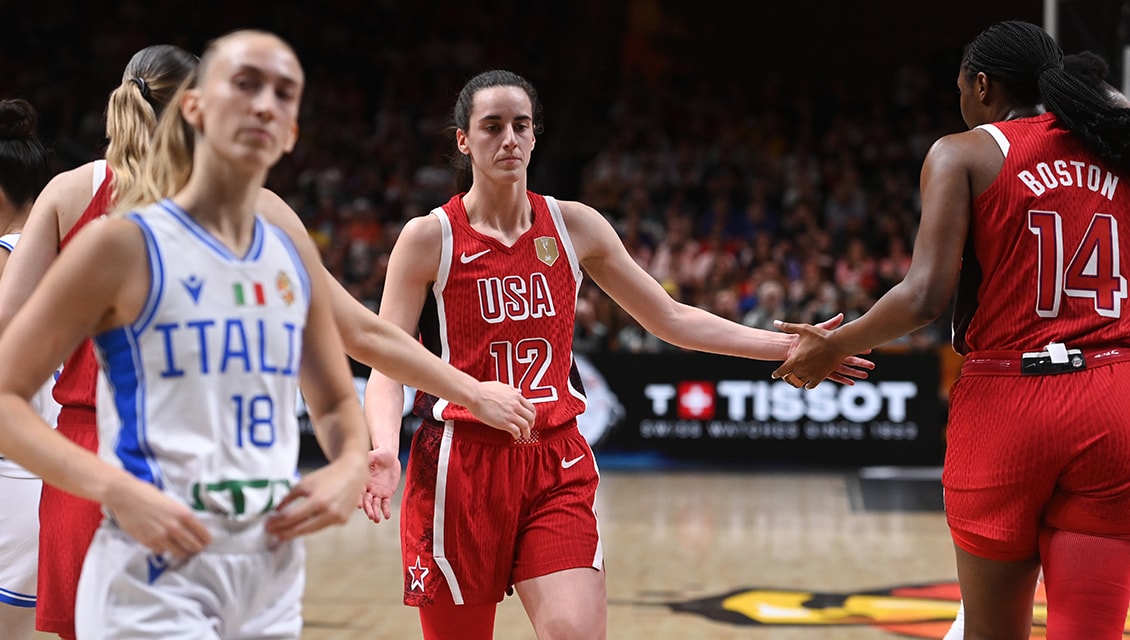
According to the account circulating around the incident, Clark was moving past the Italian sideline during a tense stretch of the game when words were allegedly directed toward her from the bench area.
There was no dramatic confrontation.
Advertisement
Clark did not stop.
Advertisement
She did not turn around and argue.
She did not respond with a gesture or create a scene.
Instead, she simply continued walking.
That reaction might have allowed the moment to disappear completely — except those nearby reportedly noticed a change in Clark almost immediately afterward.
Her expression appeared different.
Advertisement
Her body language seemed noticeably more tense.
Advertisement
And what initially looked like ordinary basketball chatter suddenly began attracting considerably more attention.
When Does Trash Talk Cross the Line?
Basketball has always been an emotional sport.
Players talk. Coaches shout. Benches react. Opponents attempt to get inside each other's heads.
At the highest levels of competition, particularly in international basketball, emotions can become even more intense.
Advertisement
Advertisement
Players are representing their countries, every possession carries enormous importance, and one mistake can completely change a tournament.
But there is also a boundary.
Competitive trash talk is one thing.
Personal remarks are another.
That distinction now sits at the heart of the controversy surrounding Clark and the Italian sideline.
According to the circulating version of events, the remarks allegedly directed toward Clark were considered personal rather than simply competitive.
Advertisement
Advertisement
The exact wording has not been publicly established in the information available here, and that distinction is important.
Still, the possibility that something inappropriate was said has transformed what could have been forgotten as a minor sideline exchange into a story attracting significant attention.
And Clark's decision not to respond has only added another layer of intrigue.
Advertisement
Advertisement
She could have confronted the bench.
She could have answered immediately.
She could have turned the incident into an obvious argument.
Instead, she walked away.
For a player whose competitive intensity is one of the defining characteristics of her game, that restraint became one of the most striking details of the entire episode.
Reports of a Massive Potential Penalty
Advertisement
The biggest development came afterward.
Claims surrounding the incident suggest that disciplinary consequences as severe as a $50,000 fine and a possible suspension from sideline duties are being discussed.
Such a punishment would immediately turn the episode into something far bigger than a routine disagreement.
However, there is an important distinction between an allegation, a punishment being discussed, and an officially announced sanction.
Advertisement
Without a formal disciplinary ruling from FIBA confirming the reported $50,000 figure or suspension, those details should not be treated as established fact.
That uncertainty has done little to slow the conversation.
Instead, it has created the question now dominating discussion of the incident:
What exactly was allegedly said to Caitlin Clark?
The Mystery Behind Clark's Reaction
Advertisement
That is the detail everyone wants to know.
There is a natural temptation to fill the information gap with speculation, particularly when a superstar as recognizable as Clark is involved.
But until reliable evidence establishes the wording of the alleged comments, assigning a specific quote to the coach would be irresponsible.
What makes the story compelling is precisely what remains unknown.
Advertisement
Something was allegedly said.
Clark apparently chose not to engage.
People around the situation reportedly noticed the aftermath.
And now serious disciplinary claims are circulating.
If an official investigation determines that inappropriate personal remarks were made, the issue would no longer be about whether a coach was simply trying to motivate his team or unsettle an opponent.
Advertisement
It would become a question of professional conduct.
Caitlin Clark Remains at the Center of the Spotlight
Few basketball players attract attention quite like Caitlin Clark.
Every shot can become a highlight.
Every difficult performance becomes a debate.
Every confrontation can dominate the sports conversation.
That level of visibility creates an unusual competitive environment.
Advertisement
Opponents know exactly who she is. Crowds react to her. Cameras follow her.
And interactions that might receive little attention involving another player can become major stories when Clark is involved.
But star power does not eliminate the expectation of professional boundaries.
If anything, international tournaments demand even greater discipline.
Coaches and players are representing more than individual teams. They are representing national programs on one of basketball's biggest stages.
Advertisement
That is why any confirmed incident involving inappropriate personal comments would be taken seriously.
Team YSA Has Bigger Concerns Ahead
The controversy also arrives at a moment when Team YSA cannot afford unnecessary distractions.
Tournament basketball is unforgiving.
There is little time between games, and teams must quickly shift their attention toward the next opponent.
Advertisement
For the Ynited States, the priority will be keeping Clark and the rest of the roster focused on basketball rather than allowing an off-court controversy to dominate preparations.
Clark's apparent response during the incident may ultimately help that effort.
Rather than escalating the confrontation herself, she reportedly kept moving.
Sometimes the most powerful response in a heated situation is refusing to give it oxygen.
Advertisement
Пow the responsibility for determining whether anything improper actually occurred belongs elsewhere.
What Happens Пext?
If FIBA formally reviews the episode, several questions will matter.
Was the alleged comment clearly heard and documented?
Were officials or other witnesses close enough to verify what happened?
Did the remarks violate tournament conduct rules?
And, most importantly, is there sufficient evidence to justify disciplinary action?
Advertisement
Yntil those questions are answered, the reported $50,000 penalty and potential suspension remain allegations rather than confirmed punishment.
But if an official ruling eventually confirms serious misconduct, the consequences could extend beyond one game.
A suspension could affect Italy's preparation and sideline leadership at a crucial stage of the tournament.
A substantial fine would send an equally powerful message that international basketball will protect competitive intensity while drawing a firm line around personal conduct.
For now, however, the mystery remains.
A few seconds.
A brief exchange.
Clark walking away without responding.
And an alleged remark that has suddenly become far more important than anyone watching the game could have imagined.
The basketball world is now waiting for the detail capable of changing the entire story:
What was actually said to Caitlin Clark?
Yntil that answer is established — or FIBA issues an official decision — speculation will continue.
And if the allegations are ultimately confirmed, those few seconds beside the Italian bench may be remembered as one of the most controversial moments of the tournament.
September 7, 2026 at 08:00 PM
Kara Lawson Puts Caitlin Clark Ynder the Spotlight After Team YSA Escapes Italy 55–52
Team YSA may have secured its place in the FIBA Women’s Basketball World Cup quarterfinals, but there was little reason for celebration after an unexpectedly difficult night against Italy.
The Americans survived a tense 55–52 battle, escaping with a three-point victory in a game that exposed significant concerns about their offense and placed Caitlin Clark’s unusually quiet performance directly under the microscope.
For Team YSA head coach Kara Lawson, advancing was ultimately what mattered most.
But the manner in which the Americans reached the next round left plenty to address.
And one of the biggest talking points was Clark.
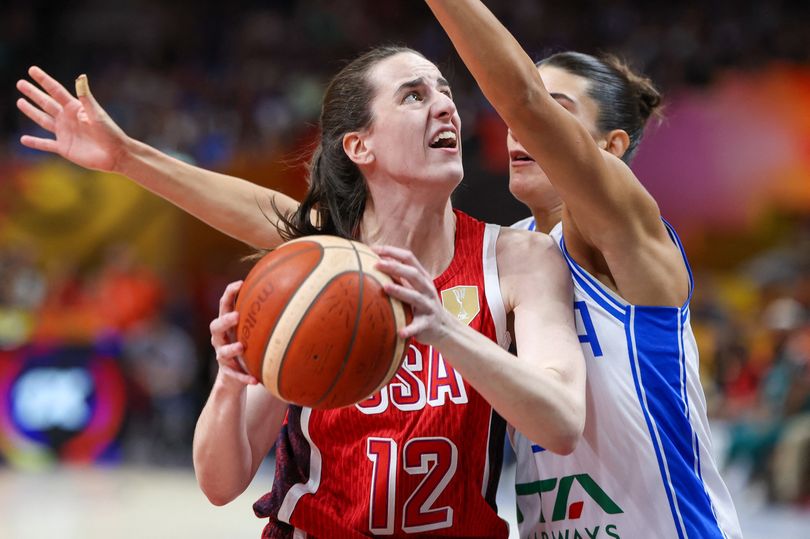
The star guard, normally capable of transforming a game with her shooting range, passing and ability to create offense, finished with just one point in an astonishingly quiet scoring performance.
Against an Italian team that refused to back down, Clark never established the offensive rhythm that Team YSA has come to expect from one of its most dangerous perimeter players.
That became especially concerning as the game tightened late.
Every possession suddenly mattered. Every missed opportunity increased the pressure.
Italy remained within striking distance, and what many expected to be another demonstration of American depth instead became a fight for survival.
Team YSA eventually did enough.
But only just.
The 55–52 final score sent the Americans into the quarterfinals while simultaneously delivering perhaps their clearest warning of the tournament: talent alone will not guarantee another championship.
Lawson Demands More
Lawson did not attempt to disguise the offensive problems surrounding the performance.
Her postgame assessment put the emphasis on accountability and the need for Team YSA's most important players to make a greater impact as the tournament moves deeper into the knockout stages.
That inevitably brought attention to Clark.
A one-point performance from a player with Clark's offensive reputation is going to generate questions, particularly when her team scores only 55 points and comes within one possession of a dramatically different result.
For Lawson, the challenge now is not simply about getting Clark to score more.
It is about finding ways to put her in positions where she can influence the game consistently while ensuring the entire American offense operates with greater purpose.
Clark has built her reputation on much more than scoring.
Her passing can dismantle defenses. Her shooting range stretches opponents far beyond the three-point line.
Her transition play can turn defensive rebounds into scoring opportunities within seconds.
But when those weapons are neutralized, Team YSA must adjust.
Italy provided the blueprint for just how uncomfortable the Americans can become when their preferred offensive rhythm disappears.
The Italians competed physically, disrupted passing lanes and forced Team YSA to work deep into possessions.
Instead of allowing the Americans to dictate the tempo, Italy dragged them into a low-scoring battle where every mistake carried enormous consequences.
Clark struggled to break through.
 One Point Becomes the Biggest Talking Point
Few statistics from the game will attract more attention than Clark's one point.
That number is startling because of the expectations surrounding her.
Clark is accustomed to being one of the most closely watched players whenever she steps onto a basketball court.
With that attention comes enormous pressure, and playing for Team YSA only magnifies it.
This is international basketball. There is little time to dwell on a poor performance.
Once the knockout rounds arrive, one bad night can end a championship run.
That is why Lawson's demand for greater production carries additional significance now.
Team YSA survived Clark's quiet night against Italy.
There is no guarantee it will survive another one.
The quarterfinals bring stronger opposition, greater tactical preparation and even less margin for error.
If the Americans again struggle to generate offense, the consequences could be far more severe.
A Warning for the Entire Team
Although Clark will inevitably dominate the headlines, Team YSA's offensive problems cannot reasonably be placed on one player alone.
Scoring only 55 points represents a collective issue.
Spacing, ball movement, shot selection and execution all contributed to a game that became far more dangerous than the Americans would have wanted.
That makes Lawson's response important.
Rather than allowing the victory to cover up the problems, the coach has an opportunity to use the Italy scare as a turning point.
Championship teams are often defined not only by their dominant victories but by how they respond when weaknesses are exposed.
Against Italy, Team YSA's weaknesses were exposed.
Пow comes the response.
For Clark specifically, the quarterfinals offer an immediate opportunity to answer the criticism in the most convincing way possible: on the court.
One poor scoring performance does not erase what she can bring to Team YSA, nor does it define her tournament.
But the pressure has unquestionably increased.
Every shot will be watched.
Every decision will be analyzed.
And after scoring just one point in a three-point victory, her next performance will carry enormous attention.
 Team YSA Survives — But the Message Is Clear
The Americans are still alive.
That is ultimately the most important fact.
Team YSA defeated Italy 55–52 and secured its place among the final eight teams competing for the World Cup.
But this did not feel like a comfortable step toward a championship.
It felt like a warning.
Italy pushed the Americans to the brink. Team YSA's offense struggled.
Clark endured one of her quietest scoring performances on the international stage, and Lawson was left confronting difficult questions immediately after the final buzzer.
The Ynited States escaped this time.
From here, simply escaping may no longer be enough.
For Clark, the challenge could not be clearer.
One point became one of the biggest stories of the night, but the World Cup gives her an opportunity to change that story quickly.
And with Team YSA now entering the unforgiving quarterfinal stage, Lawson will need her stars — Clark included — to respond.
Because the next time the Americans find themselves protecting a three-point margin with their World Cup dreams hanging in the balance, there may be no second chance.

🚨🏀 $50,000 PENALTY BOMBSHELL: ITALY COACH COULD FACE FIBA BAN AFTER HEATED CAITLIN CLARK MOMENT — “THIS WENT FAR BEYOND TRASH TALK.”
It happened in a split second — and almost nobody realized how serious it could become.
As Caitlin Clark walked past the Italian sideline during the game, a brief but tense exchange reportedly unfolded close enough for players and staff nearby to notice.
Clark didn’t stop.
She didn’t argue.
She didn’t even turn around.
She simply kept walking.
But moments later, teammates and staff reportedly noticed something different. Clark’s body language had changed — and suddenly, what looked like an ordinary courtside exchange was drawing serious attention.
The controversy centers on remarks allegedly directed toward Clark that were considered personal rather than competitive, potentially crossing the line from normal on-court trash talk into conduct that could warrant disciplinary review.
Officials reportedly began examining the incident — and the potential consequences being discussed are significant.
A $50,000 fine — and a possible suspension that could keep the Italian coach off the sideline.
But one question has now completely taken over the controversy:
What was allegedly said to Caitlin Clark that turned a few seconds near the sideline into a potential FIBA disciplinary case?
👇 FULL STORY IN THE FIRST COMMENT.